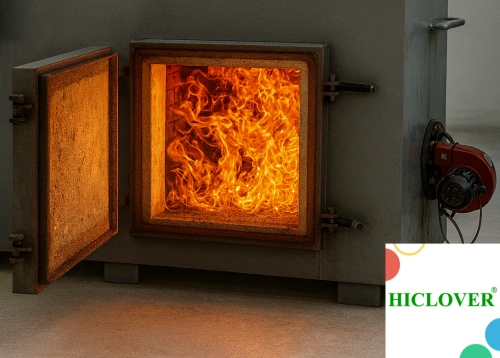
Medical Waste Incineration in Burundi: Emerging Demand & Why HICLOVER Fits the Bill
As Burundi’s healthcare sector gradually expands — with growing numbers of clinics, small hospitals and maternal health centers across urban and rural areas — the challenge of medical waste disposal is becoming increasingly urgent. Contaminated sharps, used bandages, biological waste, and other hazardous materials are quietly accumulating in many facilities that lack proper disposal infrastructure. This reality creates both a pressing public‑health concern and a clear opportunity for well‑designed incineration solutions.
What Makes Burundi’s Market Unique: Key Challenges & Demand Drivers
-
Fragmented healthcare infrastructure. Many health centers in Burundi are small, independently operated facilities spread across remote regions. These clinics often lack waste‑treatment capacity, relying instead on rudimentary disposal — sometimes simple burning in open pits or informal dumping — practices that carry high risks of infection and environmental pollution.
-
Lack of hazardous waste systems and landfills. National-level systems for medical or hazardous waste management remain underdeveloped. Few regions have designated hazardous‑waste disposal sites, and long‑distance transport of medical waste is often impractical or unsafe. That leaves on‑site disposal as the most feasible option for most clinics and hospitals.
-
Rising waste volumes with expanding care access. As Burundi improves access to basic and maternal care, the volume of medical waste — from syringes to disposable medical supplies — increases steadily. Without proper disposal infrastructure, the risk to staff, patients, and nearby communities grows accordingly.
-
Need for decentralized, flexible waste treatment. Because health facilities are so widely spread and many serve small patient loads, there’s demand for incineration systems that are compact, easy to install, and can operate independently — without dependence on centralized waste‑treatment facilities.
These factors together shape a growing market demand for medical‑waste incinerators tailored to Burundi’s realities: small to mid‑scale, self-contained, easy to deploy, safe and environmentally responsible.
A Shift Toward On‑Site Incineration: Emerging Market Trends
Stakeholders in Burundi — including public health administrators, NGOs, donor‑funded clinics, and private healthcare providers — are increasingly recognizing that effective waste disposal must happen at the point of origin. There is a gradual shift away from dangerous, informal practices like open burning or dumping toward more controlled, bio‑secure disposal.
This trend favors incinerators that are:
-
Modular and portable, so they can be installed even in remote or resource-poor clinics;
-
Fuel‑flexible, to cope with inconsistent fuel supply across regions;
-
Efficient and safe, ensuring complete destruction of infectious waste while minimizing harmful emissions;
-
Low‑maintenance and easy to operate, given shortage of trained technical staff in many facilities.
As Burundi continues to build out its healthcare network, demand for such incinerators is likely to expand — especially among rural clinics, maternity centers, and small hospitals.
Why HICLOVER Incinerators Are Especially Suitable for Burundi
HICLOVER offers a range of medical waste incinerators whose features align closely with the practical needs and constraints of Burundi’s healthcare context:
-
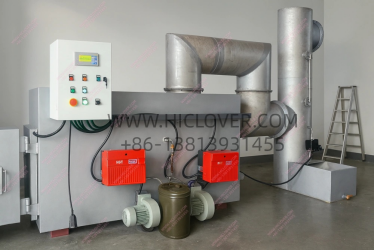
Containerized mobile incinerators — These compact, self-contained units can be shipped and installed quickly, without requiring dedicated civil‑works or permanent infrastructure. Clinics in remote regions benefit from rapid deployment and independent operation.
-
Fuel versatility (diesel, LPG, natural gas) — In regions where fuel supply infrastructure is unreliable or uneven, HICLOVER’s multi‑fuel capability ensures continuous operation.
-
Dual‑chamber combustion with optional air‑scrubbing — Ensures thorough destruction of infectious materials, significantly reducing risk of pathogen spread, and limiting harmful emissions in sensitive environments.
-
Scalable design from small clinics to larger hospitals — For small rural health posts, compact units are cost‑effective and sufficient. For mid‑sized hospitals, larger-capacity or automated models handle higher waste volumes efficiently.
-
Low installation and operational burden — Minimal external dependencies and straightforward operation make these units practical for facilities with limited technical resources.
These technical advantages translate into real-world suitability: HICLOVER incinerators can help Burundi’s healthcare providers meet waste‑management needs now — and scale up safely as the system grows.
Extra Focus: Environmental Safety & Community Health Protection
Beyond the immediate goal of disposing medical waste, a critical but often underemphasized benefit is protecting community health and environment. Improper disposal — open burning or dumping — can lead to soil contamination, water pollution, airborne toxins, and increased risk of infectious disease.
By providing properly engineered incineration solutions, HICLOVER equipment helps safeguard not only hospital staff and patients, but also residential communities near medical facilities. This broader public‑health impact aligns with long‑term goals of sustainable healthcare expansion and environmental protection in Burundi.
Conclusion: Seizing Opportunity — HICLOVER as Partner for Burundi’s Waste‑Management Future
Burundi stands at an inflection point: as healthcare access expands, medical waste is growing — but infrastructure for safe disposal lags behind. The combination of fragmented clinics, weak waste systems, rising waste volumes, and limited technical capacity makes decentralized, flexible incineration solutions a clear priority.
HICLOVER’s medical waste incinerators — with containerized mobility, fuel flexibility, robust combustion, and environmental safety — represent a strategic, practical and scalable option to meet this demand. For hospitals, clinics, NGOs, and development partners working in Burundi, adopting HICLOVER units can mean the difference between hazardous waste accumulation and reliable, safe disposal — supporting both public health and environmental stewardship.
2025-12-07/21:35:56
|
Incinerator Items/Model |
HICLOVER TS100(PLC)
|
|
Burn Rate (Average) |
100kg/hour |
|
Feed Capacity(Average) |
150kg/feeding |
|
Control Mode |
PLC Automatic |
|
Intelligent Sensor |
Continuously Feeding with Worker Protection |
|
High Temperature Retention(HTR) |
Yes (Adjustable) |
|
Intelligent Save Fuel Function |
Yes |
|
Primary Combustion Chamber |
1200Liters(1.2m3) |
|
Internal Dimensions |
120x100x100cm |
|
Secondary Chamber |
600L |
|
Smoke Filter Chamber |
Yes |
|
Feed Mode |
Manual |
|
Burner Type |
Italy Brand |
|
Temperature Monitor |
Yes |
|
Temperature Thermometer |
Corundum Probe Tube, 1400℃Rate. |
|
Temperature Protection |
Yes |
|
Automatic Cooling |
Yes |
|
Automatic False Alarm |
Yes |
|
Automatic Protection Operator(APO) |
Yes |
|
Time Setting |
Yes |
|
Progress Display Bar |
3.7 in” LCD Screen |
|
Oil Tank |
200L |
|
Chimney Type |
Stainless Steel 304 |
|
1st. Chamber Temperature |
800℃–1000℃ |
|
2nd. Chamber Temperature |
1000℃-1300℃ |
|
Residency Time |
2.0 Sec. |
|
Gross Weight |
7000kg |
|
External Dimensions |
270x170x190cm(Incinerator Main Body) |
|
Burner operation |
Automatic On/Off |
|
Optional |
|
|
Wet Scrubber |
Optional |
|
Optional |
|
|
Asbestos Mercury Material |
None |
|
Heat Heart Technology(HHT) |
Optional |
|
Optional |
|
|
Dual Control Mode(Manual/Automatic) |
Optional |
|
Temperature Record |
Optional |
|
Enhanced Temperature Thermometer |
Optional |
|
Incinerator Operator PPE Kits |
Optional |
|
Backup Spare Parts Kits |
Optional |
|
Optional:Containerized/Trailer/Sledge Optional |
Comments are closed